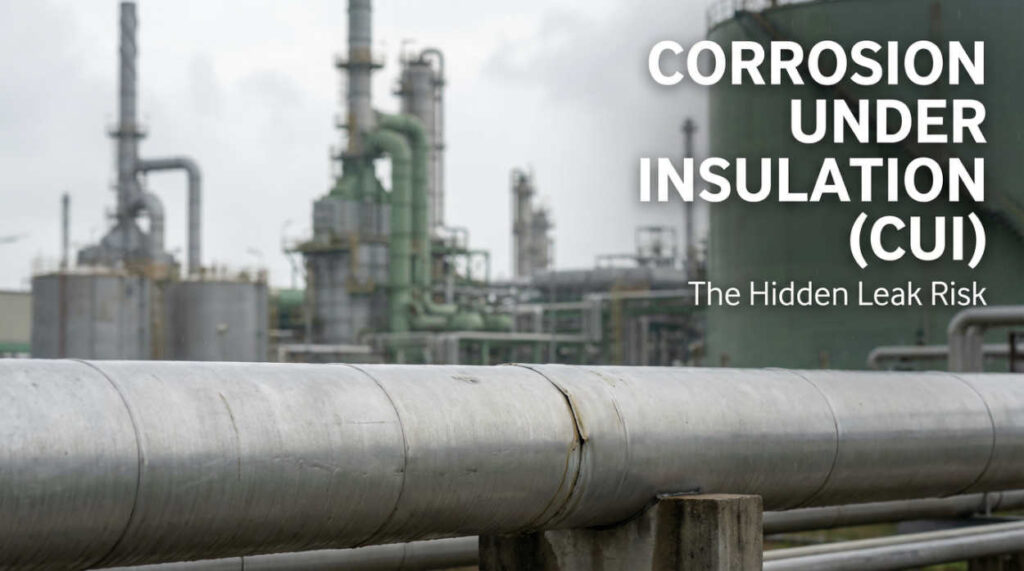
Jurong Island sites do not usually fail because nobody cared. They fail because water gets in, then stays there, then nobody sees what happens next. That is why Corrosion Under Insulation is so dangerous in Singapore. You can have a pipe that looks fine from the outside and is already one rainy season away from a leak at a support.
In our CUI work across Singapore terminals and chemical plants, the most useful mindset shift is simple. Stop treating CUI like a visual inspection problem. Treat it like a moisture management and data screening problem.
What is Corrosion Under Insulation and why is it so dangerous?
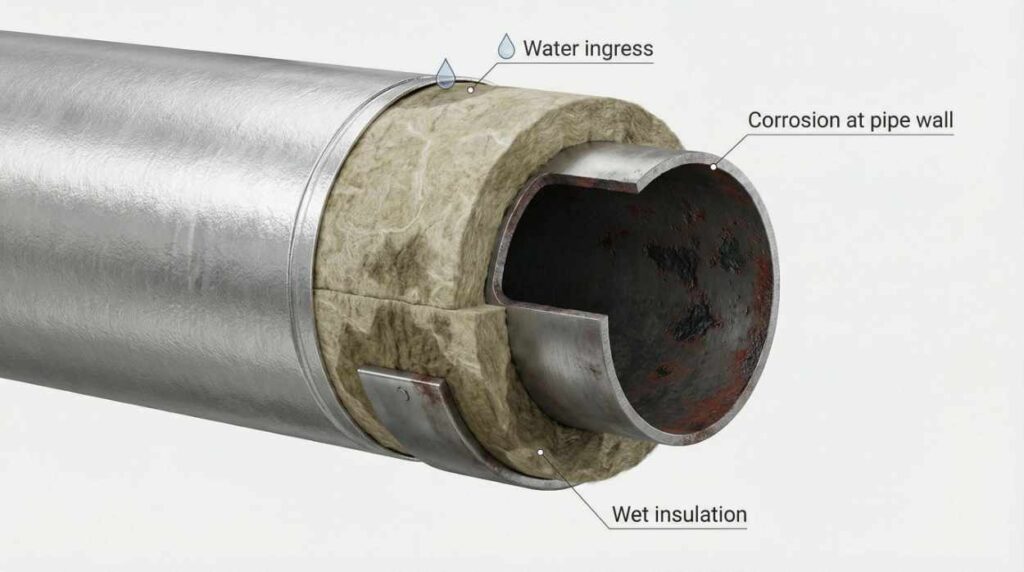
[Answer Capsule] Corrosion Under Insulation is external corrosion that occurs on metal surfaces hidden beneath insulation when moisture enters through damaged jacketing, failed seals, or condensation. In Singapore’s humid and rainy environment, wet dry cycling drives fast, localised wall loss, especially at supports and low points. Without targeted NDT, CUI can progress unnoticed until loss of containment.
CUI is not one mechanism. It is a family of damage processes that share one thing. Moisture reaches the metal surface under insulation and cannot escape. Once that happens, corrosion can be rapid, uneven, and highly localised. The risk is amplified by Singapore’s conditions: frequent rainfall, high humidity, and in many plants, chloride rich marine air.
Two facts matter most when you build a CUI program.
1) Temperature decides whether moisture stays and cycles
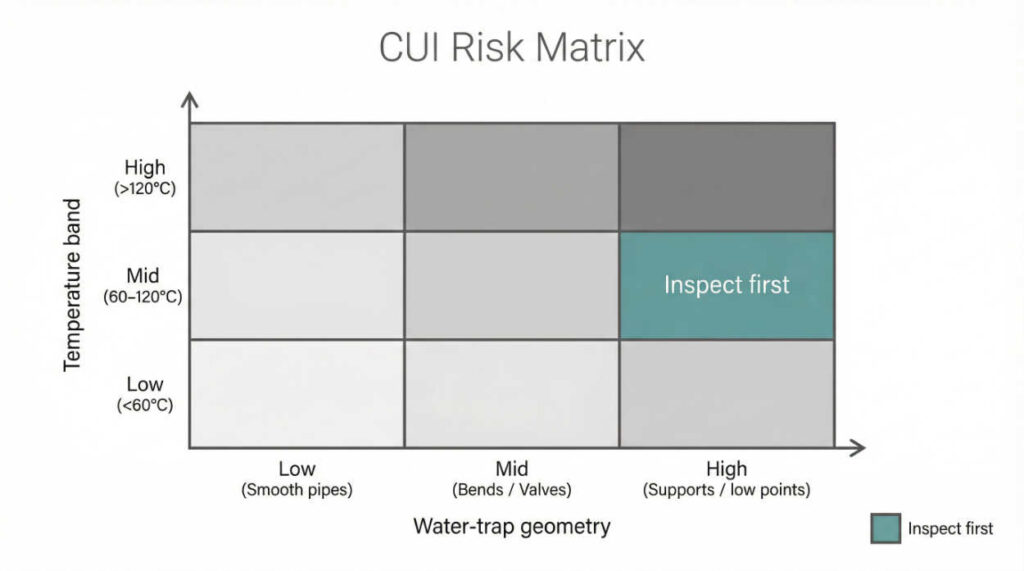
API guidance commonly associates higher CUI risk in a broad band from about minus 4°C up to about 175°C, with peak severity often reported in the roughly 60°C to 120°C range because water can repeatedly condense and re evaporate. ([eballotprodstorage.blob.core.windows.net][1])
This matches what we keep seeing on operating sites. Assets in the 60°C to 120°C band tend to show the most aggressive combination of trapped moisture and oxygen access, especially where insulation systems have aged.
2) Geometry decides where water collects
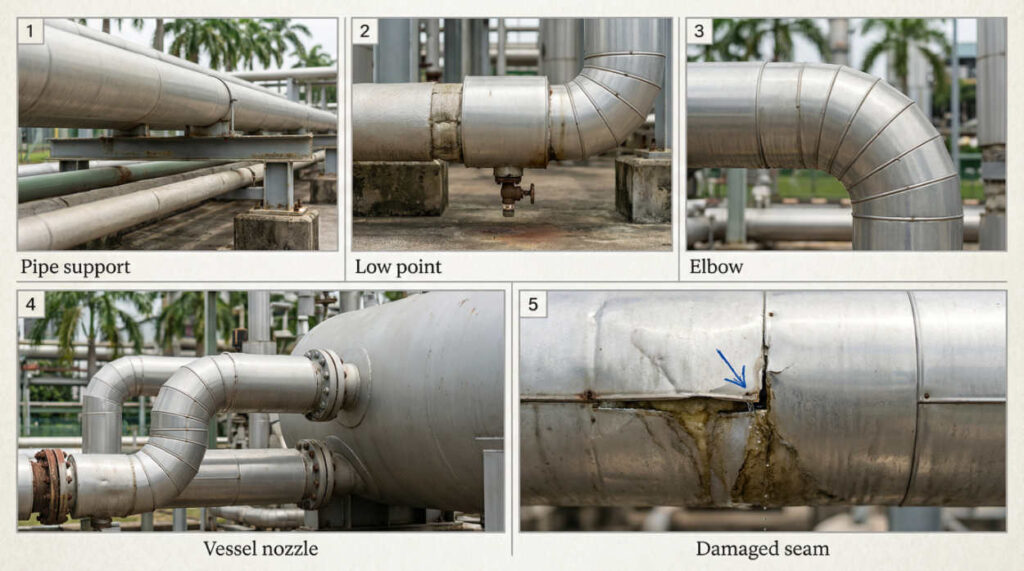
In Singapore, our most frequent severe findings are at pipe supports and low points. These are the spots where water pools, dirt packs in, and runoff is poor. We also prioritise vessel nozzles and any area under damaged jacketing, because a small jacketing defect can feed a large wet zone under insulation.
Why CUI accelerates in Singapore and Southeast Asia
CUI needs moisture, oxygen, and an electrolyte. Singapore provides all three almost year round.
Moisture sources we see most often
- Rain ingress through jacketing laps and penetrations, especially where sealants have aged.
- Condensation when operating temperatures sit in the condensation prone band and ambient humidity is high.
- Washdown and deluge exposure, where water entry points are not obvious from the outside.
- Leaks from adjacent lines and valves, which can soak insulation for long periods.
Why “looks dry” is often wrong
Insulation can feel dry externally and still be wet at the metal interface. Rockwool and similar fibrous insulation can hold moisture in pockets and keep it close to the pipe surface, especially where compression at supports creates dense zones with poor drainage.
API Recommended Practice 583 is explicit that CUI mitigation is a system problem involving design, maintenance, inspection, and mitigation practices. ([api.org][2])
Where CUI damage concentrates and how to prioritise inspections
If your inspection plan treats every metre of insulated piping as equal, you will waste budget and still miss the real threats. We prioritise by combining temperature band, geometry, insulation condition, and consequence of failure.
Bukom Engineering field pattern in Singapore
Based on our recent projects:
- Most frequent severe damage is at pipe supports and low points.
- High attention zones include vessel nozzles and under damaged jacketing.
- Worst corrosion severity clusters in operating temperatures from minus 4°C to 175°C, with a practical “sweet spot” often at 60°C to 120°C.
A practical risk matrix you can apply fast
| Factor | What to look for | Why it matters |
|---|---|---|
| Temperature | minus 4°C to 175°C, especially 60°C to 120°C | Higher wet dry cycling and sustained moisture presence ([GWM Knowledge Hub][3]) |
| Geometry | supports, low points, clamps, nozzles | Traps water and debris, slows drying |
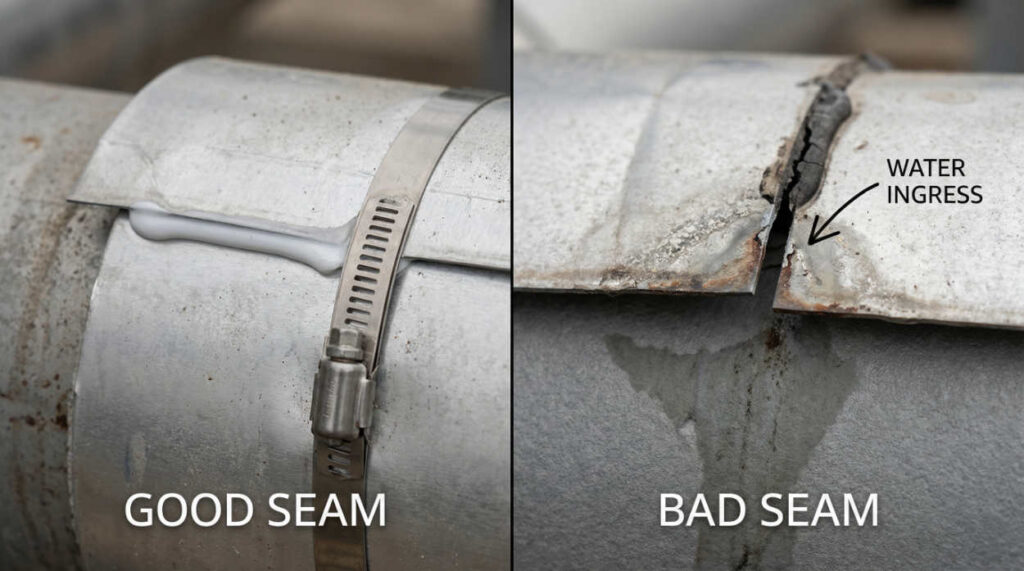
| Jacketing | dents, open seams, missing bands, penetrations | Primary entry path for rain and wash water |
| Consequence | hydrocarbon, hot service, toxic service, critical transfer lines | Drives inspection urgency and repair planning |
Detection strategies that work when insulation stays on
Visual inspection alone cannot manage CUI. You need NDT that gives you actionable screening data without stripping large areas of insulation.
In our Singapore screening work, we rely heavily on:
Pulsed Eddy Current (PEC) for rapid screening
PEC is effective for bulk wall loss screening through insulation, especially when you need coverage across many locations quickly.
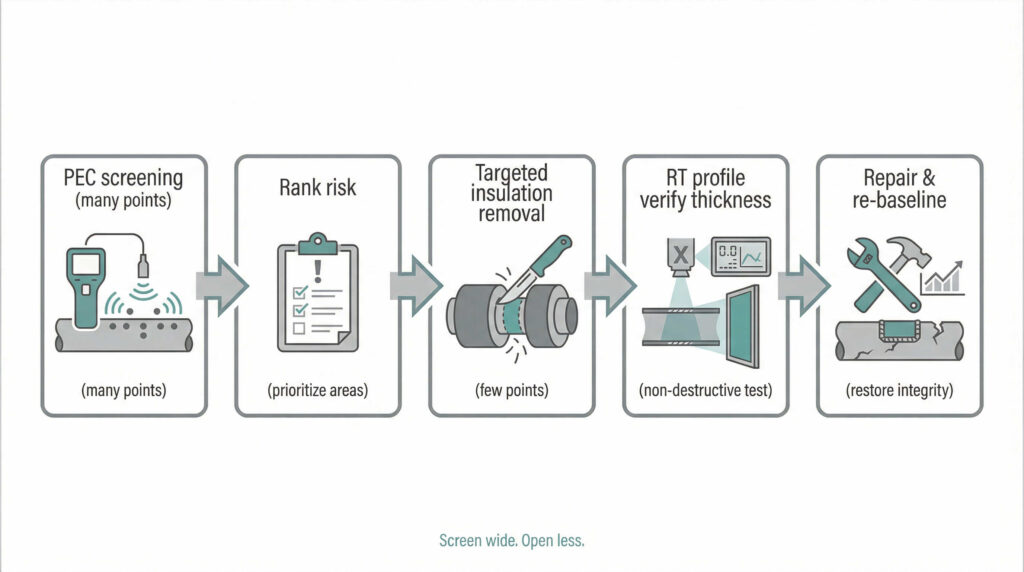
Our rule of thumb is direct: If insulation is thicker than 100 mm or the geometry is complex, we prioritise PEC for rapid screening, then follow with targeted insulation removal at high readout areas.
Radiography profile (RT) for thickness verification
When we need precise confirmation of remaining wall thickness at a suspect area, radiography profile is a strong verification tool.
Method comparison for planning
| Method | Best use | Strength | Limitation |
|---|---|---|---|
| PEC | screening many points without stripping | fast coverage, good for bulk wall loss | not a substitute for direct visual confirmation at repair points |
| RT profile | confirm thickness at selected points | accurate verification | higher logistics and access planning |
| Targeted strip and inspect | final confirmation and repair prep | direct observation and surface assessment | costly if used too broadly |
A real save story from Singapore with numbers
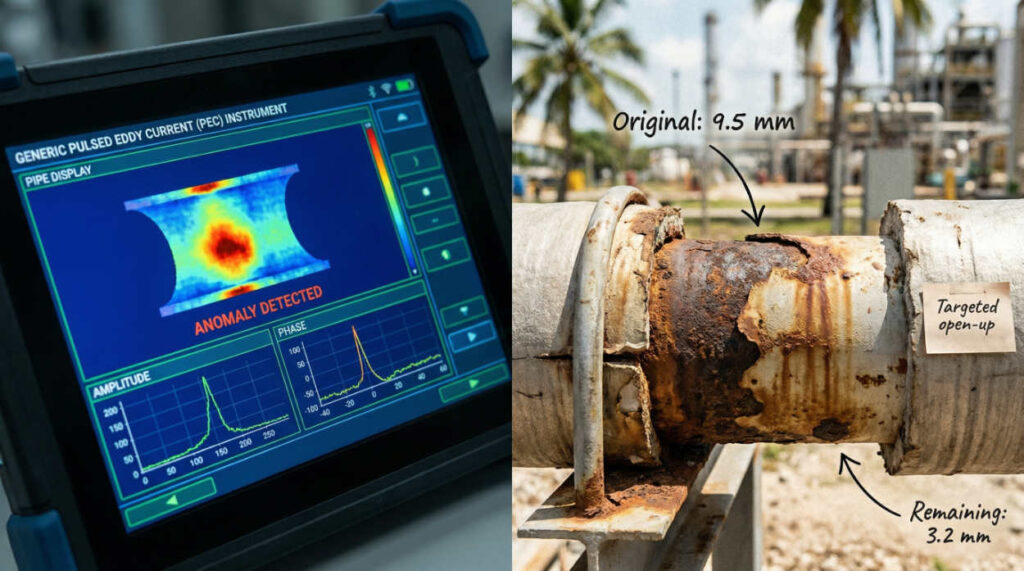
During a routine integrity audit for a chemical terminal, we screened insulated carbon steel lines using PEC.
Asset: 10 inch crude oil transfer line.
Insulation system: Rockwool with aluminium jacketing.
Screening result: PEC flagged a strong wall loss anomaly near a horizontal pipe support.
We recommended targeted insulation removal at that location. When stripped, the condition was clear.
- Original wall thickness: 9.5 mm
- Remaining thickness found: 3.2 mm
- That is about 65 percent wall loss, with severe localised pitting.
The client executed an emergency wrap repair during a scheduled minor window.
Here is the part most teams care about.
- 120 locations screened
- 4 locations opened
- Estimated $150,000 avoided in emergency cleanup and repair costs
- Avoided about 3 days of unplanned downtime
This is why we push data driven screening.
Prevention and mitigation that actually holds up on operating sites
CUI prevention works only when it is treated as a system.
API RP 583 frames mitigation across design, maintenance, inspection, and repair practices. ([api.org][2])
Practical prevention priorities we recommend in Singapore
- Fix water entry paths first
- Treat supports and low points as a different class
- Use screening to control stripping
- Plan for wet insulation as a repair condition
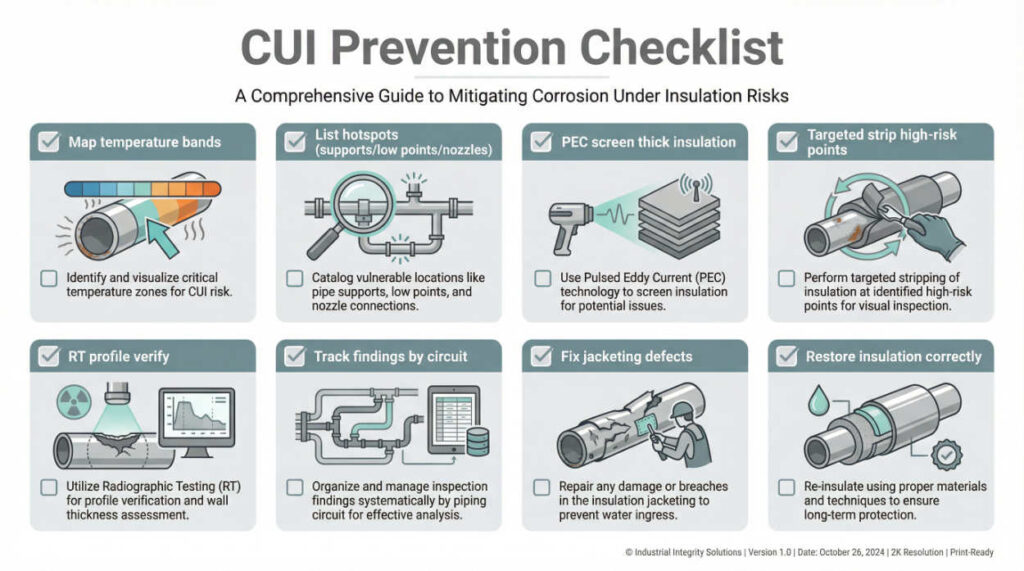
Preventative measures checklist for Plant Managers and Asset Integrity teams
Use this as a quick internal audit list before the next turnaround.
- Map insulated assets by operating temperature.
- Build a hotspot list per circuit.
- Screen broadly with PEC when insulation is thick, above 100 mm, or geometry is complex.
- Verify high risk points with targeted stripping and, where needed, RT profile.
- Track screened locations, opened locations, and confirmed loss.
- Treat insulation system defects as maintenance findings, not cosmetic issues.
- After repairs, restore the insulation system properly.
Singapore compliance and governance that should shape your CUI program
CUI is an integrity risk. It is also a safety risk.
How Bukom Engineering supports CUI control programs
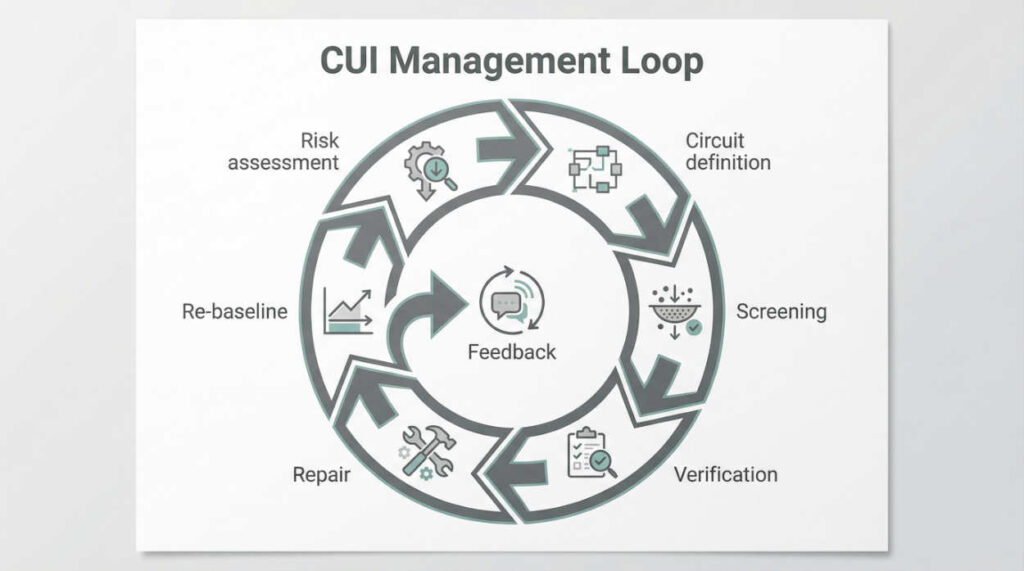
When clients call us after a leak, the story is often the same. “We did walkdowns. We did painting. The line still failed.” The fix is a program that links risk, screening, verification, and repair execution.
Ready to reduce your CUI risk before it becomes a leak?
If you want a quick, practical second opinion on your corrosion under insulation exposure, we can help you prioritize what to screen first and where to open insulation without blowing your budget.
Book a soft consult with our team and we will:
- Review your operating temperature bands and circuits.
- Flag your most likely water trap locations like supports, low points, nozzles, and damaged jacketing zones.
- Recommend a screening plan using PEC and targeted verification so you open fewer spots but catch the real threats.
Next step: Contact us now and tell us your asset type, operating temperature range, and where you suspect water ingress.