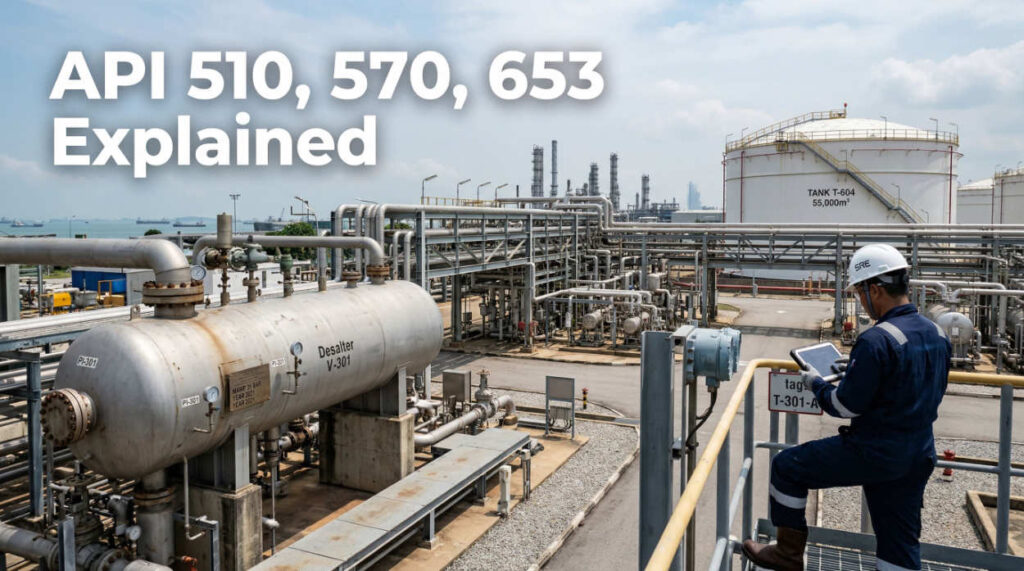
Most plant managers in Singapore do not lose money because of a single catastrophic failure. They lose it slowly. Missed PM schedules. Electricians pulled off critical tasks to fix a leaking chiller. Housekeeping crews that show up late and leave early. By the time the numbers show up on a P&L, the damage is already compounding.
Singapore’s facility management market hit USD 3.69 billion in 2025, with outsourcing accounting for nearly 63% of all contracts. That number keeps climbing because plant operators are learning the same lesson: trying to do everything in house costs more than hiring specialists for the right scope.
This guide breaks down exactly what industrial facility management services you should outsource, what to keep internal, and how to make that decision without overspending or losing operational control.
How Much Does Industrial Facility Management Cost in Singapore?
For a typical industrial plant in Singapore, outsourced facility management ranges from S$2.50 to S$8.00 per square foot per month depending on scope, plant type, and compliance requirements. A basic maintenance retainer for a 10,000 sqft light industrial unit starts around S$2,500/month. A full integrated FM contract for a 50,000 sqft petrochemical or pharmaceutical facility can exceed S$25,000/month when specialist E&I servicing, shutdown support, and regulatory compliance are included.
These costs vary based on three factors: how many systems you outsource, the regulatory burden on your specific industry, and whether you need 24/7 response capability.
Mechanical Maintenance: The First Thing to Outsource
Mechanical systems account for the highest unplanned downtime in most industrial plants. Rotating equipment, HVAC units, compressors, pumps, and process cooling systems all require scheduled preventive maintenance and rapid breakdown response.
Here is why outsourcing mechanical maintenance makes sense for most plants:
Specialized tooling and diagnostics. Vibration analysis, thermographic scanning, and alignment tools are expensive. A good FM contractor already owns them and trains technicians to use them. Buying this equipment for one facility rarely makes financial sense.
Predictive maintenance capability. Contractors running multiple industrial sites accumulate performance data across equipment brands and operating conditions. That data improves their ability to predict failures before they happen. A single in house team working on one plant does not have the same dataset.
Shutdown and turnaround support. Scheduled plant shutdowns require rapid mobilization of crew and equipment. Contractors like Bukom Engineering Services maintain bench strength for exactly this scenario. They coordinate task planning, safety protocols, and execution without pulling your operations team off their core responsibilities.
MOM compliance. Under the Workplace Safety and Health Act, all machinery and equipment in industrial workplaces must be properly maintained to prevent accidents. MOM inspections in 2026 are increasingly data driven, with cross referencing of safety records and maintenance logs. An outsourced specialist keeps documentation audit ready.
Electrical Systems: High Risk, High Reward for Outsourcing
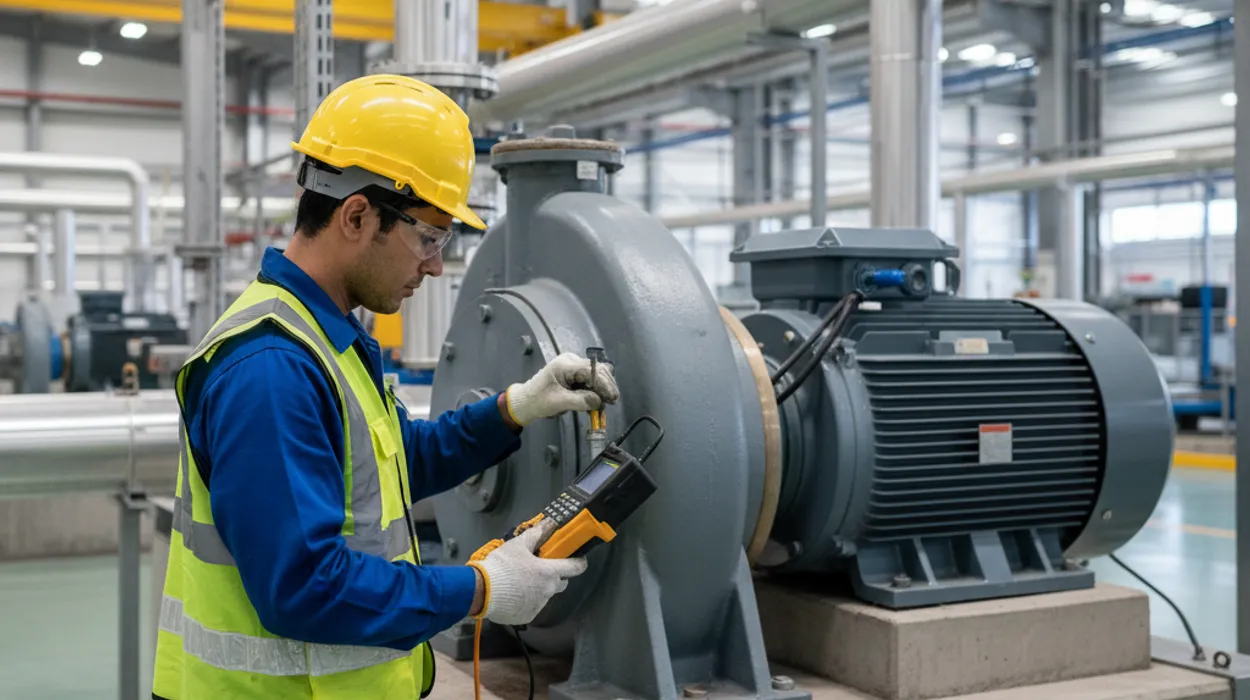
Electrical and instrumentation (E&I) work in industrial plants carries real safety and compliance risk. A wiring fault in a petrochemical facility is not the same as a tripped breaker in a commercial office.
BCA registration requirements. Any contractor performing electrical or mechanical engineering work in Singapore must hold the appropriate BCA workhead registration. The Mechanical and Electrical (ME) workhead requires technicians with a diploma in Mechanical, Electrical, or Electronics Engineering at minimum. Verify this before signing any FM contract.
SCDF fire safety obligations. Industrial facilities must maintain fire protection systems including sprinklers, fire alarm panels, and emergency lighting. The Singapore Civil Defence Force requires a valid Fire Certificate (FC) for occupied premises. Any modification to electrical systems near fire safety installations needs SCDF approval through the Fire Safety and Shelter Department (FSSD). Outsourced E&I contractors familiar with industrial plants handle these submissions routinely.
Licensed Electrical Worker (LEW) requirement. Under the Electricity Act, certain electrical works must be carried out or supervised by a Licensed Electrical Worker. Most small to mid sized plants do not employ a full time LEW. Outsourcing solves this gap without adding headcount.
For oil and gas, pharmaceutical, and data center facilities, E&I outsourcing is close to mandatory. The compliance burden alone justifies it.
Housekeeping and Cleaning: Do Not Ignore It
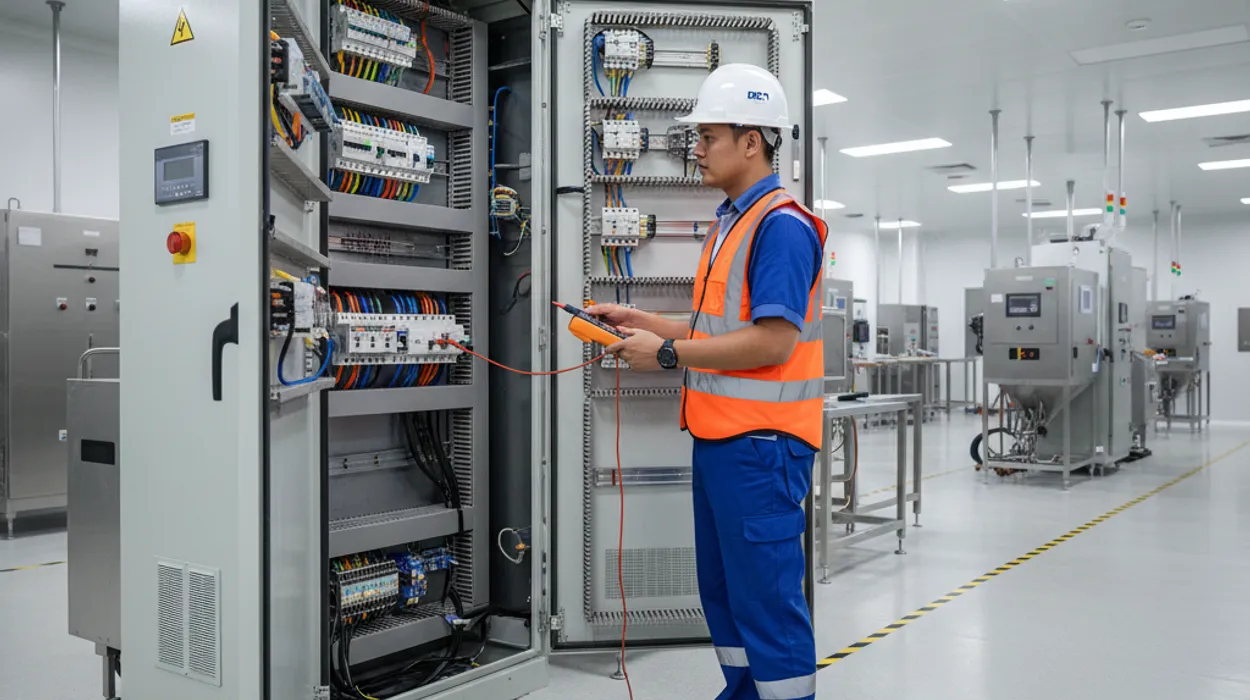
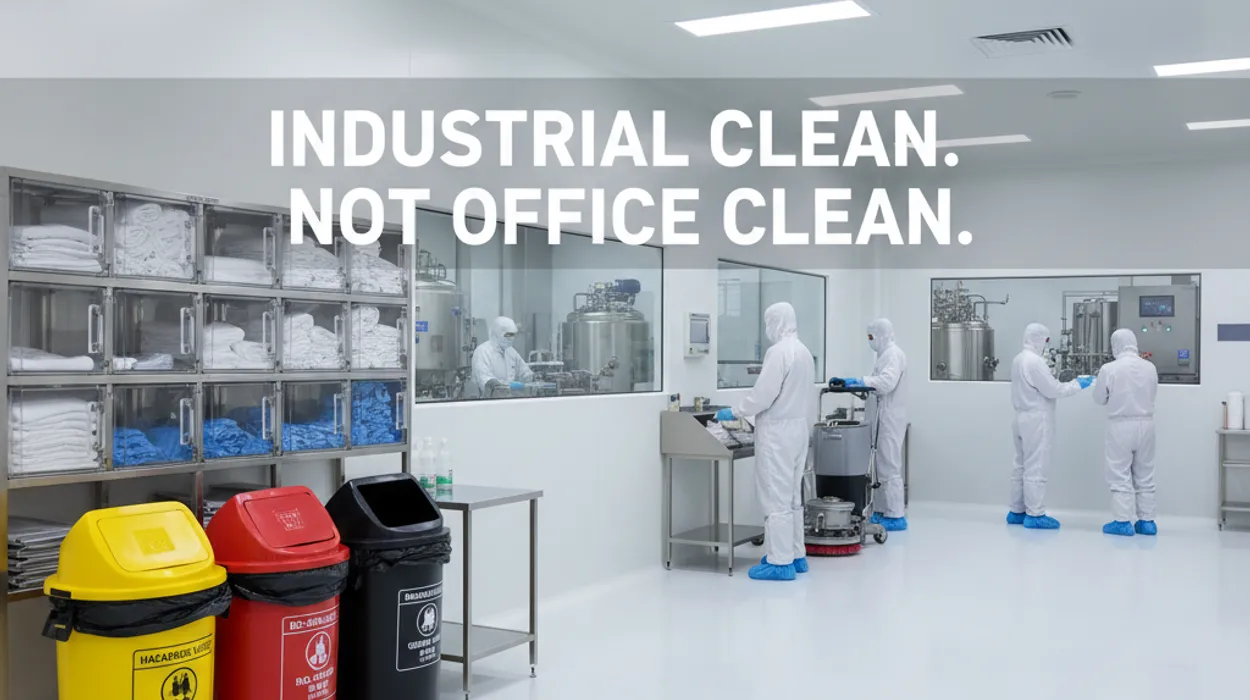
Industrial housekeeping is not the same as commercial cleaning. In plants handling chemicals, pharmaceuticals, or food grade products, cleaning protocols tie directly to GMP compliance, NEA licensing, and workplace safety scores.
GMP and cleanroom environments. Pharmaceutical and biotech plants require validated cleaning procedures. Staff must be trained on contamination control, gowning protocols, and documentation. This is specialist work.
NEA and environmental compliance. The National Environment Agency enforces waste management, pest control, and environmental hygiene standards. Industrial plants generating trade effluent or hazardous waste need cleaning crews who understand proper disposal procedures and reporting requirements.
Cost efficiency. General housekeeping is the easiest FM function to outsource because the labour is high volume and low margin. Keeping it in house means managing foreign worker levies, dormitory arrangements, leave coverage, and turnover. A cleaning contractor absorbs all of that.
When In House Makes More Sense Than Outsourcing
Not everything should be outsourced. Here is where keeping it internal still wins:
Process critical operations. If your plant runs a proprietary manufacturing process, the operators who understand that process should stay on payroll. Outsourced FM works best for building and utility systems, not production line control.
Small scope, high frequency tasks. Daily equipment checks, basic lubrication rounds, and operator level maintenance (cleaning filters, topping up fluids) are faster and cheaper when done by your own team. These do not require specialist qualifications.
Security and access control. In high security environments like defence related manufacturing or data centres, keeping facility access management internal reduces risk. Outsourced crews rotating through sensitive areas create compliance headaches.
Institutional knowledge. Your longest serving maintenance technician knows which valve sticks, which sensor drifts, and which pump sounds wrong before the data confirms it. That knowledge takes years to build. Retain those people internally and let them supervise outsourced specialists.
Cost Comparison: Small Plant vs. Large Industrial Facility
| Cost Factor | Small Plant (10,000 sqft) | Large Facility (50,000 sqft) |
|---|---|---|
| Mechanical maintenance | S$1,200 to S$2,500/month | S$6,000 to S$15,000/month |
| E&I servicing | S$800 to S$1,500/month | S$4,000 to S$10,000/month |
| Housekeeping | S$600 to S$1,200/month | S$3,000 to S$7,000/month |
| Regulatory compliance management | Included or S$500/month | S$2,000 to S$5,000/month |
| Estimated total | S$2,600 to S$5,700/month | S$15,000 to S$37,000/month |
| PSF range | S$2.60 to S$5.70 PSF | S$3.00 to S$7.40 PSF |
Prices reflect 2026 market rates for outsourced integrated facility management in Singapore. Actual costs depend on plant type, operating hours, and compliance tier.
How to Choose the Right FM Partner for Your Industrial Plant
Check BCA registration. Confirm the contractor holds the correct workhead registration for FM and ME services. First time registration is valid for three years before renewal.
Ask about industry experience. A contractor managing commercial offices is not the same as one running maintenance in oil and gas or pharma. Look for track records in your specific sector.
Verify compliance capability. Can they handle SCDF fire safety submissions? Do they have Licensed Electrical Workers on staff? Will they maintain audit ready documentation for MOM inspections?
Assess shutdown readiness. If your plant requires periodic shutdowns, your FM partner must be able to mobilize additional crew quickly without compromising safety or quality.
Bukom Engineering Services has spent over 20 years supporting industrial plants across oil and gas, pharmaceutical, and data centre sectors in Singapore. Their integrated approach covers mechanical maintenance, E&I servicing, housekeeping, and shutdown support under a single contract, eliminating the coordination headaches of managing multiple vendors.
Start With the Right Scope
The biggest mistake plant managers make is outsourcing too much or too little on the first contract. Start with the functions that carry the highest compliance risk and require the most specialized skills: mechanical maintenance and E&I servicing. Add housekeeping once you have validated the contractor’s reliability.
Keep process critical operations and daily operator level checks in house. Use your internal team as the quality gatekeepers for your outsourced partners.
The goal is not to replace your team. It is to make them more effective by removing the work that does not need their specific expertise.