Workplace safety in Singapore isn’t just a box-ticking exercise—it’s what keeps businesses open, teams healthy, and everyone’s livelihoods protected. Especially in engineering and construction, those safety regulations aren’t just for show. They exist because one neglected step or shortcut can affect an entire workforce and even the wider community.
Staying up to speed with safety law doesn’t just mean avoiding fines. It’s about being known as a company that values life, quality, and a solid reputation. Our tips come straight from the job site, not just the rulebook, reflecting the hands-on experience we’ve built at Bukom Engineering. If you want a safe, modern workplace—and all the trust that comes with it—you’re in the right place. You’ll see how that approach sets us apart from the usual crowd.
Understanding the Workplace Safety and Health Act Framework
Getting your head around Singapore’s workplace safety system starts with the Workplace Safety and Health Act (WSH Act). This is the main piece of legislation you need to obey if you run a business in Singapore, regardless of whether you’re running a high-risk oil platform or a quiet data centre office. The WSH Act is the backbone of all safety-related expectations.
The reason the WSH Act sits at the heart of everything is simple: it lays down who’s responsible for what, who needs protecting, and how far a business has to go to keep things safe. Whether it’s clear signage on a noisy construction site or keeping maintenance logs up to date in a pharmaceutical plant, everything ties back to the standards and obligations this Act sets.
You’ll also hear a lot about subsidiary legislation and codes of practice—not just the Act itself. These might sound complicated, but they’re what turn vague safety principles into concrete, enforceable rules for your workplace. If there’s ever a change following a serious industry incident, new codes and subsidiary regulations usually lead the way. So, understanding the WSH Act and its supporting rules is like knowing the ABCs of running a compliant business in Singapore.
We’ve seen, first-hand, how businesses get tripped up by missing details or changes—so let’s break down what matters most and what’s legally expected.
Key Provisions of the WSH Act for Businesses
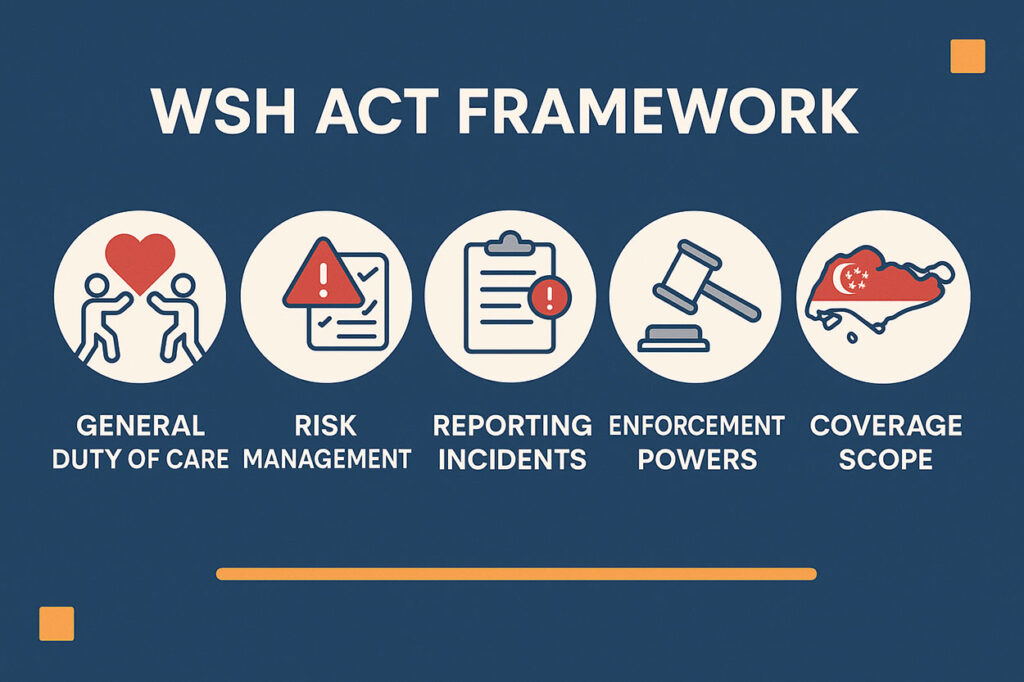
- General Duty of Care: Every employer must ensure the safety, health, and welfare of employees at work. This clause applies to all workplaces, regardless of industry.
- Risk Management: Businesses must identify hazards, assess risks, and implement effective control measures. Regular risk assessments are a must, and records need to be kept available for inspection.
- Reporting Incidents: The Act requires employers to report workplace accidents, dangerous occurrences, and occupational diseases to authorities in a timely manner.
- Enforcement Powers: The Ministry of Manpower (MOM) can inspect sites, issue stop-work orders, and prosecute breaches. Penalties include hefty fines, jail terms, or revoking permits for severe or repeated offences.
- Coverage Scope: The Act covers all industries, expanding its reach beyond traditional factories to office environments, service sectors, and even temporary workplaces.
Essential Subsidiary Legislation and Codes of Practice
- WSH (Risk Management) Regulations: Sets out specifics for how businesses must conduct risk assessments and review them regularly.
- WSH (General Provisions) Regulations: Details requirements for accident prevention, safe use of machinery, and up-to-date maintenance records.
- WSH (Hazardous Substances) Regulations: Governs the storage, handling, and disposal of chemicals and other hazardous materials with strict labelling and training requirements.
- Code of Practice for Working Safely in Confined Spaces: Guidelines protect workers entering tanks, vaults, or tunnels—critical in sectors like oil & gas and infrastructure.
- Industry-Specific Codes: Standards exist for construction, marine, healthcare, and manufacturing, adapting the law to sector risks and providing checklists that MOM and WSH Council use during inspections.
Employer Responsibilities for Workplace Safety Compliance
If you’re an employer in Singapore, the law spells out what’s expected when it comes to safety. It’s not enough to just know the rules—you have to show you’re following them, too. The authorities hold employers to a high standard, and that means putting proper safety processes in place before something goes wrong.
These responsibilities range from creating a safe workspace and training staff, all the way to regular risk assessment and clear reporting channels. This isn’t just for show—one missed checklist or ignored warning can lead to real trouble. From our own experience on project sites, we’ve learned that clear processes and documentation are what keep teams protected and companies protected from legal headaches.
For HR leaders and site managers alike, knowing exactly where your accountability starts and stops is key. You’ll want to know not just the bare minimum, but the best practices that make compliance second nature, not an afterthought. In the next sections, we outline the details of what the law requires—and what you can do to go beyond the basics and really make workplace safety part of your everyday routine.
This practical, hands-on advice is what separates companies that merely comply from those that thrive, even when regulations change overnight.
Your Top Duties as an Employer Under WSH Laws
- Provide a safe working environment: Keep workplaces free of hazards, such as exposed wiring or blocked emergency exits. Overlooking something as simple as walkway clutter can lead to injuries.
- Conduct risk assessments regularly: Identify dangers before work begins and document the steps taken to manage them. Too many firms wait for an incident to review their risk plans.
- Maintain equipment and facilities: Ensure machinery and tools are serviced and up to standard. Faulty gear not only slows down work but puts lives at risk.
- Deliver safety training and consultation: Train staff on correct procedures, use of personal protective equipment, and emergency response. Skipping refresher sessions is a common but costly oversight.
- Engage employees in safety matters: Create open channels for reporting hazards and involve teams in safety committee meetings. Ignoring frontline feedback is an accident waiting to happen.
How to Maintain Workplace Safety Compliance
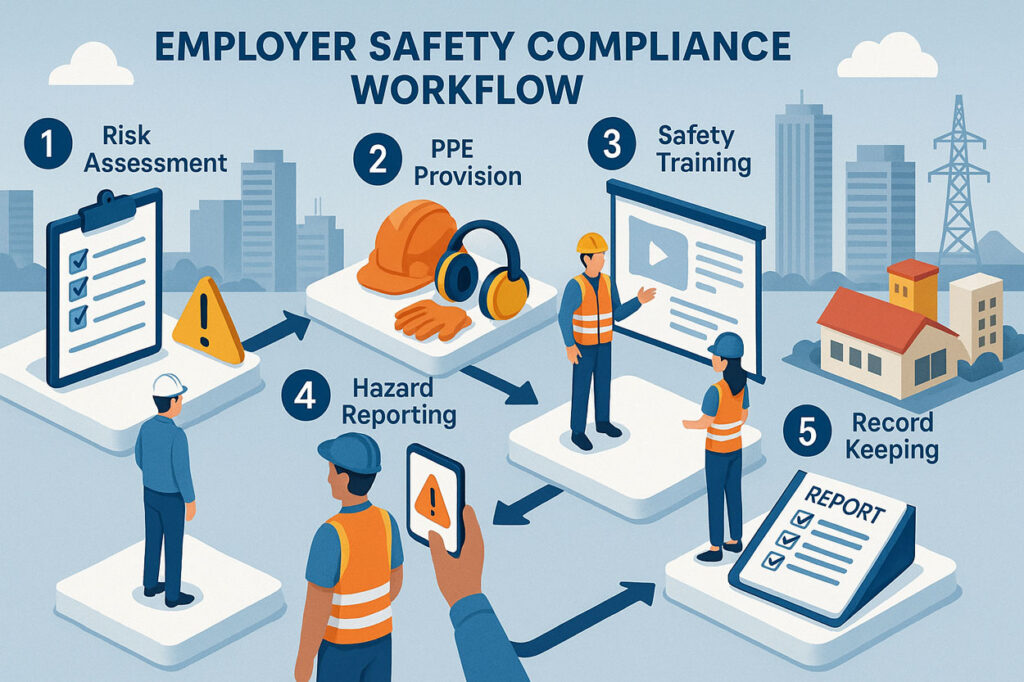
- Carry out thorough risk assessments: Review risks for each task, especially in hazardous operations. Update these regularly to reflect changes in processes or equipment.
- Issue personal protective equipment (PPE): Make sure employees have the right gear and that it’s checked and replaced as needed. Poor fit or damaged PPE is almost as bad as no protection at all.
- Encourage hazard reporting: Set up simple systems for staff to raise safety concerns, with no fear of reprisals. Regular toolbox talks help spot subtle risks early.
- Keep clear records: Document incidents, actions taken, and maintenance regularly. Digital logs and incident tracking make audits—and improvements—easier to manage.
- Provide ongoing safety training: Make safety part of the job, not a one-off induction. Continuous learning keeps standards fresh, especially in rapidly changing worksites. If you want to know more about integrating safety into maintenance, don’t hesitate to reach out for support.
Employee Rights and Whistleblower Protection at Work

The backbone of any safe workplace is respect—for rules, for risks, and most importantly, for people. Singapore’s WSH laws protect the rights of workers to be informed, involved, and never forced into unsafe situations. Employees aren’t just expected to follow safety rules—they’re empowered to question and challenge practices if their wellbeing is at risk.
Whether someone is a long-serving supervisor or a brand-new contractor, they have clear legal backing to speak up about dangers. The law even shields those who report hazards or refuse dangerous work from any sort of payback, making it easier to build a culture where everyone feels responsible for everyone else’s safety.
From our years in the industry, we’ve found that empowering employees to act when something seems wrong is the most reliable way to prevent small problems from becoming big disasters. This section explains what basic protections are built into the system—and what workers and managers alike need to know so that good intentions never get lost in paperwork or politics.
It’s about making sure everyone on site, or in the office, feels comfortable flagging concerns—and knows exactly what happens next if they do.
Key Employee Rights Under WSH Regulations
- Right to safety information: Employees can ask for information about hazards and protective measures at any time.
- Participation in safety discussions: Staff should be encouraged to join safety committees and attend meetings that affect workplace health.
- Refusal of unsafe work: Workers can legally stop work if conditions present a serious threat to their safety or health.
- Protection from retaliation: The law forbids employers from punishing or dismissing anyone for reporting dangers or refusing unsafe tasks.
- Access to incident reporting: Employees are entitled to clear, confidential ways to report hazards or incidents without fear of blame.
How Workers Can Refuse Unsafe Work and Escalate Hazards
- Stop work immediately: If a task feels unsafe, employees have the legal right to cease work on the spot and remove themselves from harm’s way.
- Document the hazard: Take photos or jot down clear notes about the unsafe condition—these records strengthen the case and speed up investigations.
- Report through official channels: Notify the direct supervisor, WSH officer, or use formal reporting forms. If the issue is ignored, escalate via internal hotlines or union reps.
- Escalate to authorities if needed: If management does not address the issue, contact the Ministry of Manpower. Anonymous reporting is available so whistleblowers feel secure.
- Expect legal protection: No employer can punish a worker for genuine safety concerns. Real-world experience at Bukom shows that workers who raise issues, even if disruptive in the short term, are vital to long-term safety. For more direct support with workplace incidents or questions, employers and staff can contact our safety team for help.
Practical Penalties for Non-Compliance and Work Suspension Risks
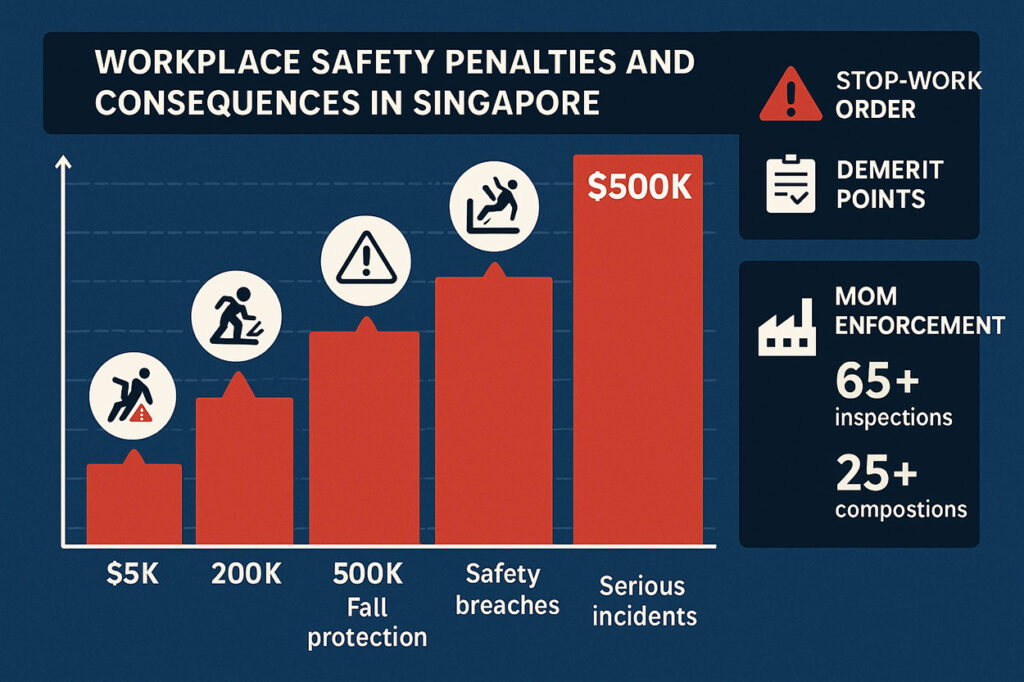
When workplace safety is ignored, it’s not just about risking a few thousand bucks or a telling-off from the boss. Singapore’s Ministry of Manpower (MOM) has real bite when it comes to enforcement. The price for failing to follow WSH regulations can include eye-watering fines, criminal charges, or even being shut down entirely until things are fixed.
It’s not just formal penalties—clients and contractors watch the headlines and judge harshly. A business that’s known for safety breaches quickly finds itself facing fewer contracts and a shaky reputation, especially in tightly knit sectors like construction and oil & gas. Nobody wants to be the cautionary tale in a MOM bulletin or an industry case study gone wrong.
For many businesses in Singapore, it only takes one missed safety assessment or a single preventable injury to set off an avalanche of trouble. Prevention, as tough as it can be to prioritise on busy days, is always cheaper and less painful than scrambling to fix things later—especially once the government or media get involved. In the next section, we break down the everyday mistakes that trip companies up—and the swift consequences you can expect if you let your guard down.
Common Safety Breaches and Their Consequences
- Skipping risk assessments: Overlooking required risk reviews is one of the fastest ways to face a fine or a MOM warning letter. Serious cases can trigger stop-work orders within hours.
- Faulty or missing PPE: Providing old or inadequate personal protective equipment is not only illegal but highly visible to inspectors—leading to instant penalties and sometimes site closure.
- Poor incident reporting: Failing to notify MOM of workplace injuries or near-misses can end in increased scrutiny, audits, and in repeat cases, criminal prosecution.
- Improper hazardous substances handling: Mishandling chemicals or not keeping proper records makes you an easy target for work suspensions—sometimes while dangerous substances are still unsecured.
- Ignoring safety training: Staff who don’t receive current, relevant safety training often feature in cases that attract both regulatory and public backlash. Companies that cut corners here may lose contracts and their industry reputation.
Growing a Strong Safety Culture and Healthy Workplace Environment

There’s a world of difference between technical compliance and a real safety culture. The regulations and checklists are important, sure—but what turns a set of rules into a safer workplace is the shared attitude and habits of the team. Good safety culture starts at the top, with leaders who talk straight about risks and follow through on promises.
When communication is open and mental health support is normalised, team members look after each other and spot trouble before accidents happen. That’s been the lesson across growing our teams, where mentoring, transparency, and peer support made the biggest impact—not just another spreadsheet or poster on the wall.
Modern safety culture doesn’t just stop at hard hats and fluorescent vests. It’s about healthier air quality, ergonomic workstations, and quick support if someone’s struggling. Companies that build this kind of environment hardly ever get blindsided by crises—the warning signs come up early, and everyone knows what to do.
The ideas in this next section are more than best practices—they’re the principles we use to keep our people strong, sharp, and safe, so the business can grow with confidence, one site and project at a time.
Best Practices for a Safer Working Environment
- Prioritise clean air and good ventilation: Regular checks and maintenance of HVAC systems help prevent respiratory issues and improve team alertness.
- Design ergonomic workstations: Adjustable chairs, proper monitor heights, and anti-fatigue mats cut down on aches and reduce risk of long-term musculoskeletal disorders.
- Encourage frequent breaks: Whether on-site or in office, scheduled pauses help avoid fatigue-related mistakes and boost mental wellness.
- Promote accessible mental health resources: Support lines, mental wellness check-ins, or a simple open-door policy make it easier for team members to ask for help.
- Maintain open, two-way communication: Regular toolbox talks and management walkabouts encourage honest feedback and keep safety initiatives fresh. For advice on facilities upkeep and a healthy workplace setup, check our service resources and address any gaps early—get in touch for more help.
Workplace Injury Compensation and Harassment Prevention
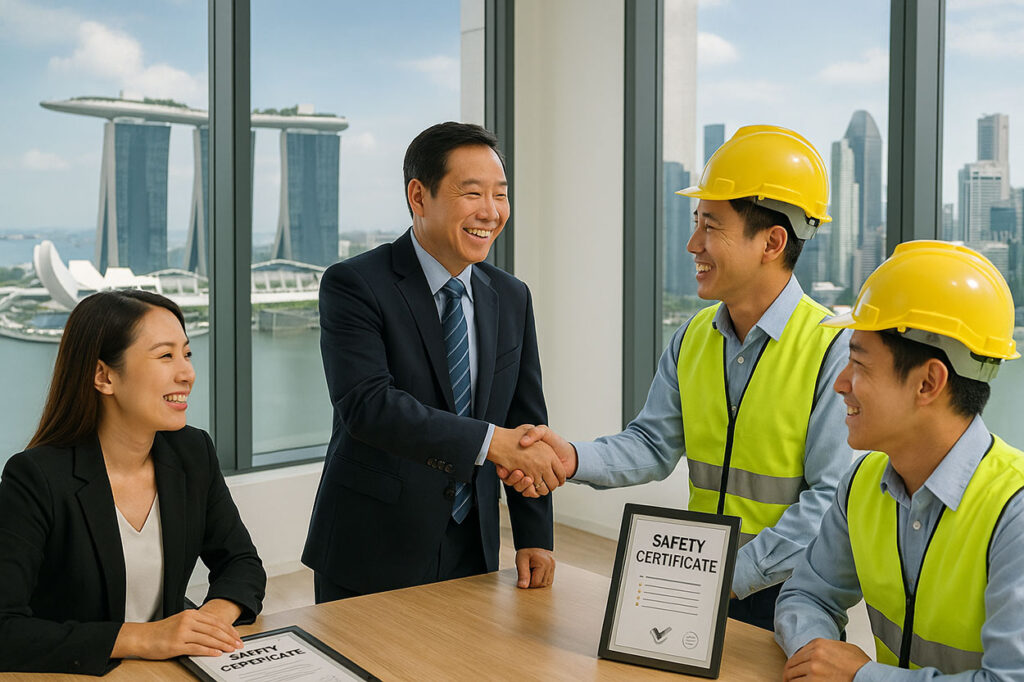
Even with the strictest safety processes, accidents can still happen. That’s why businesses and workers alike should be clear on what to do—and what rights they have—if someone is hurt on the job. Timely reporting, proper documentation, and knowing where to turn for help can make all the difference in a stressful moment.
The Work Injury Compensation Act (WICA) offers a framework where employees can claim for most workplace injuries or diseases, without needing to prove fault. This speeds up payouts and gives businesses a clear, predictable path if something goes wrong. It also means SMEs, who might not have huge HR departments, need practical guidance on managing claims smoothly and fairly.
But a truly safe workplace isn’t just about physical hazards. Harassment, bullying, and mental distress are real safety issues too. That’s why modern companies, including Bukom, build in harassment prevention and mental health support as part of their safety plans.
That way, your safety culture goes beyond accident numbers and compliance reports—it helps everyone, every day, feel secure and respected while doing their jobs. For more case studies or practical resources, you might find what you need on our Bukom Engineering blog as well.
How Workplace Injury Compensation Works in Singapore
- Check claim eligibility: Any employee injured at work or diagnosed with an occupational disease can file a claim—regardless of who was at fault.
- Report and document promptly: Notify your employer and get medical attention as soon as possible. Keep records of medical reports, photos, and witness statements.
- File your claim with MOM: Claims should be submitted within one year of the incident, using forms provided on the Ministry of Manpower website. SMEs can access help through government advisory channels if unsure.
- Assessment and payout: MOM reviews the medical evidence and calculates compensation for medical expenses, lost wages, or permanent disability. Settlements are typically faster and cheaper than court processes.
- Stay involved throughout the process: Track every conversation and update with HR or case managers. Ask questions if you’re unclear—this avoids delays and ensures fair treatment under Singapore’s WICA scheme.
Harassment Prevention Policies for Psychological Safety
- Implement written anti-harassment policies: Clear, public guidelines make the company’s zero-tolerance stance unmissable.
- Establish safe, confidential reporting channels: Options like anonymous hotlines or designated HR contacts help employees come forward without fear.
- Train all staff on respectful behaviour: Make training a routine part of onboarding and annual refreshers—not just emergency response but positive team interaction.
- Offer prompt, clear support for victims: Have procedures for investigating complaints quickly and providing support or counselling where needed.
- Review and update regularly: Keep policies and training materials up to date, especially after any reported incidents or legal updates, using lessons from industry experience as well as legal requirements.
About Bukom Engineering
At Bukom Engineering, we don’t just talk about workplace safety—we live it every day across our projects in Singapore. From oil & gas facilities to industrial maintenance, our hands-on experience with WSH compliance helps businesses stay safe, compliant, and profitable.
Ready to strengthen your workplace safety program? Contact our safety experts for a consultation tailored to your industry needs.
Last updated: October 2025 | For the latest workplace safety regulations and compliance guidance in Singapore