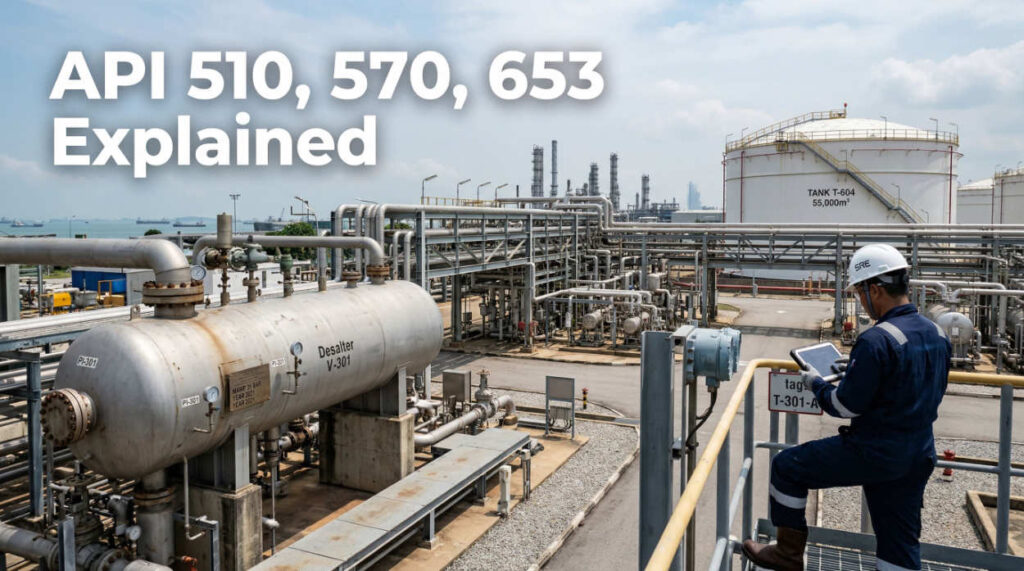
Vibration analysis sits at the heart of keeping Singapore’s industrial equipment running reliably, saving both money and headaches for maintenance teams. It’s a method that spots mechanical problems early on—think lurking bearing defects or misalignment—before they snowball into unexpected breakdowns.
For asset-intensive sectors like oil & gas, manufacturing, and marine, a single missed fault can lead to costly downtime. That’s why leading facilities depend on field-tested vibration analysis to guide smart maintenance decisions.
This guide pulls from deep real-world experience in Singapore’s industrial landscape, offering practical insights, proven tips, and real case stories. Whether you manage high-stakes machinery or plan plant turnarounds, you’ll find strategies tailored for the challenges and standards here. Ready to make vibration analysis your most reliable diagnostic tool? Let’s get into the nuts and bolts.
Understanding Vibrations in Machinery
Every piece of machinery vibrates—sometimes it’s healthy and expected, and sometimes it screams for attention. Vibrations originate from moving parts, imbalances, misalignments, looseness, or even wear and tear inside the machine. The trick is understanding what these vibrations are telling you about your machine’s health.
In Singapore’s busy marine docks and factory floors, both rotating equipment (like motors, pumps, and turbines) and reciprocating machinery (such as piston compressors) are everywhere. Each type produces unique vibration signatures. For example, a rotating shaft will display regular vibration patterns, while a reciprocating system often brings sharp peaks from each stroke or pulse. Spotting the difference quickly is key to reliable operations.
Technicians pay close attention to characteristics like amplitude (the size of the vibration), frequency (how often it repeats), and how quickly the machine vibrates (velocity, acceleration, displacement). A sudden spike in amplitude or a new frequency often signals the start of bearing defects, unbalance, or looseness. Natural frequencies—when the machine vibrates in sync with its own structure—can also cause big problems if left unchecked.
Early warning signs uncovered through vibration analysis often mean the difference between a planned service job and a full-blown emergency repair. Knowing the telltale vibration patterns of both rotating and reciprocating equipment is now part of the DNA of successful maintenance professionals in Singapore’s industry hubs.
What Is Vibration Analysis and Why Is It Crucial?
Vibration analysis is a predictive maintenance technique designed to catch equipment faults early by monitoring their vibration patterns. By carefully measuring and interpreting the vibration signals emitted by machines, maintenance teams can diagnose issues such as misalignment, imbalance, bearing faults, and loose components long before they lead to major breakdowns.
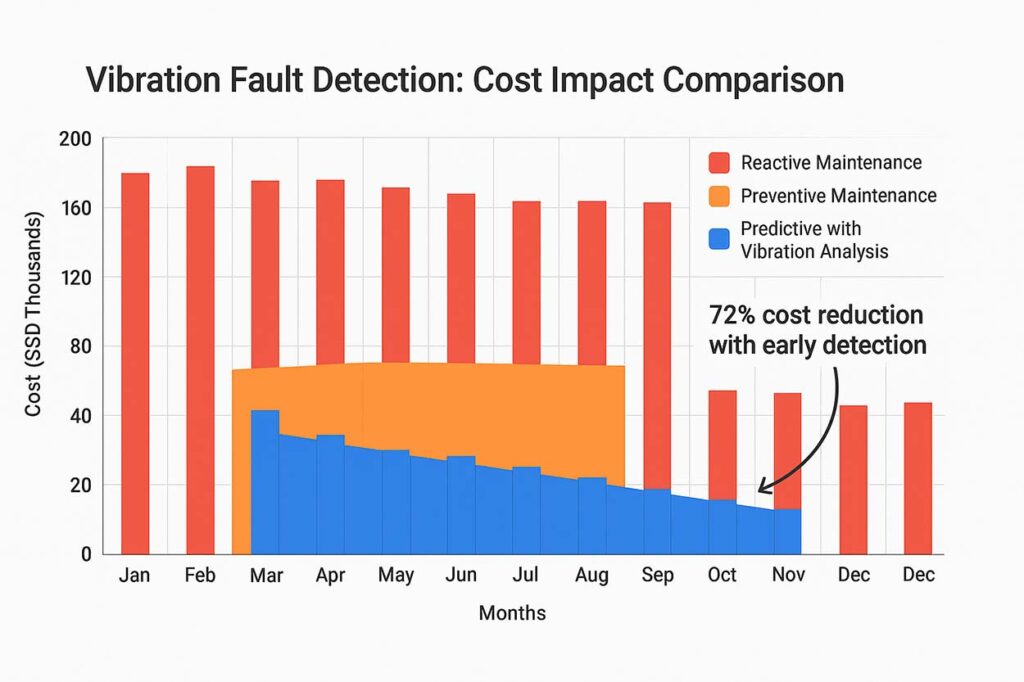
Why does this matter in Singapore’s high-stakes industries? The answer is simple: unplanned downtime is expensive, disruptive, and sometimes dangerous. By using vibration analysis as an early-warning diagnostic tool, operators gain the upper hand—replacing parts, tightening bolts, or rebalancing shafts before faults become costly emergencies.
Experienced engineers in the field have seen time and again how a readout from a vibration sensor can reveal trouble inside a pump or compressor that would otherwise go unnoticed. Vibration analysis transforms maintenance from a reactive to a proactive discipline, improving plant safety and asset longevity.
The most effective facilities embed vibration analysis routines into their broader maintenance and integrity strategies. This integration helps slash repair costs, extend equipment lifespan, and reduce the risk of safety incidents—all by using vibration signals as an ever-vigilant early warning system.
Vibration Measurement and Data Collection Techniques
Before you can act on vibration signals, you first need to measure and record them accurately. This is where both the science and the art of vibration analysis really come into play. Choosing the right sensor, mounting it correctly, and gathering data using suitable equipment can be the difference between a timely fix and a missed red flag.
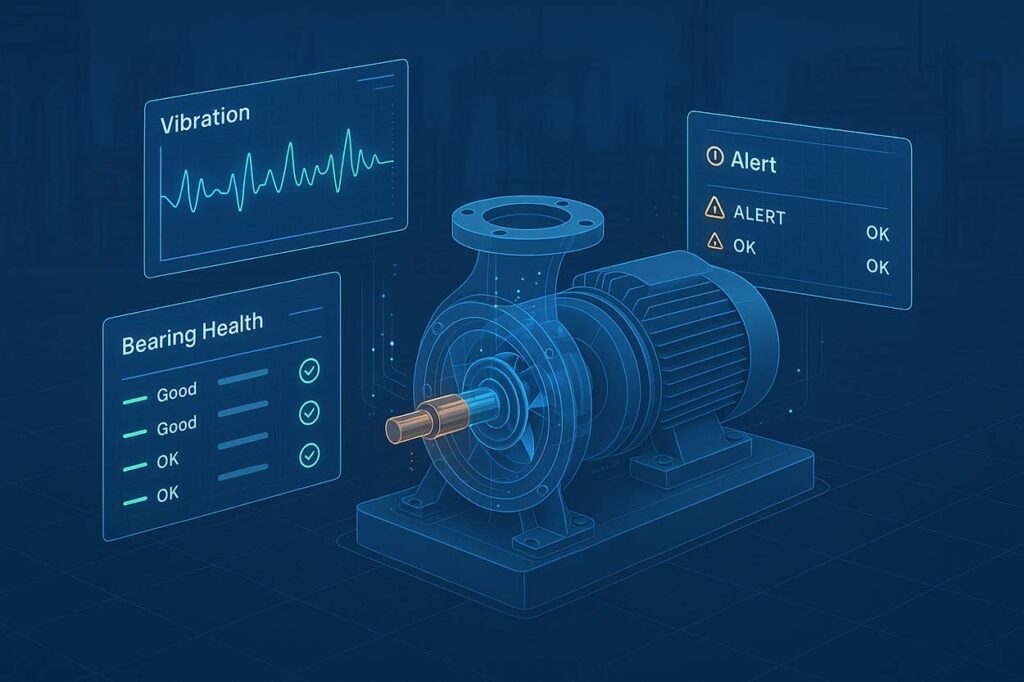
With every plant and piece of machinery having its own quirks and environmental factors, the technology for vibration measurement has also evolved. Manual data collection with handheld tools is still common, but automated online systems and wireless sensor networks are making big waves in Singapore’s facilities—especially for continuous monitoring on critical assets.
Accurate and reliable data sets are key to meaningful vibration analysis. Factors like background noise, loose mounts, and even Singapore’s humidity can introduce errors if not addressed. Years of fieldwork in industrial settings have shown that following best practices and maintaining calibration standards is non-negotiable for actionable results.
In the next sections, we’ll break down the most effective measurement tools, how to select the right one for your operations, and best methods for collecting and safeguarding vibration data. For those interested in comprehensive solutions for engineering, construction, and maintenance, Bukom Engineering Services provides integrated approaches tailored for Singapore’s demanding industries.
Vibration Measurement Methods and Tools
- Accelerometers: The go-to tool for most machinery, accelerometers detect vibration in three axes, offering fast, high-resolution readings. They’re best for motors, pumps, and rotating equipment.
- Laser Doppler Vibrometers: Non-contact instruments ideal for delicate or hard-to-reach parts. Popular in lab settings or when high precision is needed for quality control and detailed diagnostics.
- Proximity Probes: Used to measure shaft displacement—very effective on large rotating and reciprocating machines like turbines and compressors.
- Velocity and Displacement Sensors: These can be more sensitive to lower-frequency problems often seen in slow-speed bearings or structural elements.
In the tropical conditions of Singapore, sensor selection and proper mounting are vital—misplaced sensors have either missed faults on offshore pumps or falsely triggered warnings in power stations. A well-chosen tool can be the hero of the day.
Gathering and Handling Vibration Data
- Manual Data Collection: Technicians use portable data collectors to gather snapshots from specific points on the machine. It’s flexible but relies on operator skill and routine scheduling.
- Automated Monitoring Systems: Online systems or wireless sensor networks stream real-time data to central dashboards, providing instant alerts for any unusual trends or alarms. Ideal for high-criticality assets.
- Key Data Properties: Always ensure you’re recording the right sampling frequency and duration for the equipment speed. Missing these leads to inaccurate or
noisy
data, common pitfalls across industries in Singapore. - Data Integrity Protocols: Raw data should be checked for odd spikes, interference, or sensor faults. Frequent mistakes include not securing sensors or collecting during unstable operating conditions (like startup or shut-down), which skews baseline readings.
- Workflow Tips: It’s essential to track data history and log maintenance actions alongside vibration signals. This way, trends make sense over time and help refine future interventions.
For practical industrial advice on predictive maintenance and best practices from the Singaporean context, have a look at the Bukom Engineering blog.
Vibration Analysis Tools and Software Platforms in Practice
The landscape of vibration analysis tools is broad, ranging from simple handheld meters to full-featured, plant-wide monitoring systems. For spot tests or troubleshooting, portable vibration analyzers are a maintenance team’s trusty sidekick. They’re rugged, easy to use, and deliver immediate insights at the machine. Often, when time is of the essence—a hot pump on Jurong Island, for example—these devices have saved the day more than once.
When you need more than spot checks, fixed monitoring systems step in. These can be wired into control rooms or even use wireless edge sensors that process some data onboard, reducing the load on central systems and allowing real-time alarms. With Singapore’s density and tight space in many facilities, wireless networks reduce cable clutter and installation hassle.
On the software side, platforms like IBM Maximo and Power-MI are carving out reputations for managing vibration data across multiple sites, integrating with asset management, and triggering predictive maintenance jobs automatically. These tools can benchmark machine performance site-to-site, standardise reporting, and help visualise long-term trends using dashboards and AI-driven suggestions.
Choosing the right tool often means balancing budget, criticality, and in-house expertise. For operations juggling total facilities maintenance, it might be worth consulting with a specialist—contact options are available through Bukom Engineering Services—to make sure your investment truly fits your specific maintenance needs in Singapore’s demanding operating environment.
Vibration Analysis Methodology and Interpretation Techniques
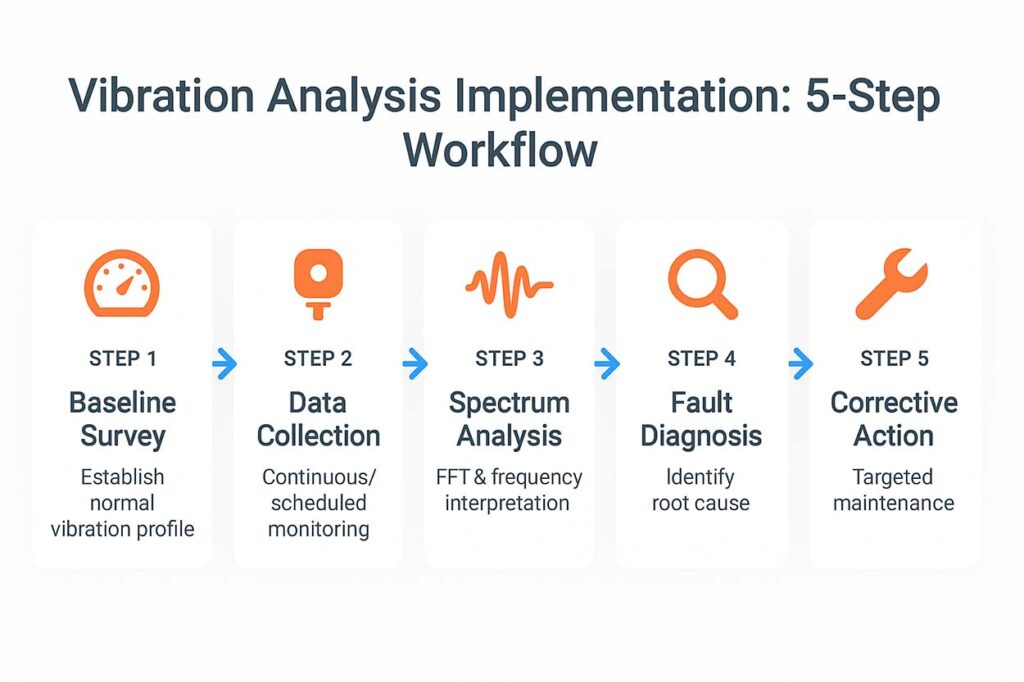
The real skill in vibration analysis doesn’t stop with recording data—it’s all about making sense of the numbers. The best analysts follow a structured methodology, starting from baseline machine surveys, through regular monitoring, to sophisticated root cause analysis. This organised approach prevents false alarms and hasty interventions that can do more harm than good.
Drawing from local experience, the initial step always involves establishing a normal
vibration profile for each asset. In Singapore, where equipment often runs 24/7, this baseline helps spot changes at a glance. Scheduled checks keep teams on top of trends, not just surprises.
Data interpretation requires comparing current readings against historical records, known fault signatures, and industry benchmarks. The next sections delve into common techniques—like frequency domain analysis (FFT), modal and envelope analysis—that help identify not just that something is wrong, but what and where. This is especially vital for mixed equipment: high-speed turbines versus slow-rolling compressors or even plant structures.
Keeping to solid protocols and leveraging the experience of seasoned analysts means errors and misdiagnoses are rare. And as many in marine and industrial maintenance around Singapore can confirm, that’s the difference between calm operations and disruptive downtime.
Frequency Domain and Advanced Spectrum Techniques
- Fast Fourier Transform (FFT): Converts time-based vibration data into frequency components, making it easy to spot fault frequencies linked to problems like unbalance or misalignment. For example, repeated 30 Hz spikes often flag early bearing issues before they’re obvious in the time waveform.
- Spectrum Analysis: Analysing the entire frequency spectrum helps distinguish between similar symptoms—say, gear mesh problems versus resonance in a gearbox. Experienced analysts have caught hairline gear cracks in Singaporean production lines using this insight.
- Modal Analysis: Used to examine the natural frequencies and mode shapes of structures or machine frames. This technique detects vibration-induced fatigue and helps prevent facility integrity issues, like surface cracking in plant supports.
- Envelope Analysis: Especially powerful for rolling-element bearings and gearbox diagnostics, it amplifies small impact signals buried in noise—allowing maintenance teams in power plants to replace failing bearings before catastrophic meltdown.
Real stories from local sites show that using these advanced techniques, teams have repeatedly nipped gearbox and bearing failures in the bud—saving millions in the process.
Applications of Vibration Analysis in Singapore Industries
Vibration analysis has an extensive reach across Singapore’s industries, each with its own set of equipment and operational demands. In the energy sector, wind turbines rely on continuous vibration monitoring to catch imbalances or bearing wear early—vital for preventing unplanned outages and optimizing energy production costs. That’s especially relevant when a single bearing replacement avoids weeks of downtime and lost revenue.
The transport industry also leans on vibration analysis. Trains serving the island’s bustling corridors use it to keep automatic door systems opening and closing smoothly, improving both safety and reliability. In manufacturing and process industries, vibration monitoring protects miles of piping and conveyor systems, identifying points of excessive vibration that threaten to fatigue welds or support frames over time.
The marine sector faces unique challenges with its rotating and reciprocating machinery exposed to salt, heat, and constant motion. Vibration analysis allows for targeted inspections on pumps and generators before ships even reach dock. Facilities managers are also now extending vibration monitoring techniques to plant structures, ensuring long-term integrity of pipelines and support frames under constant mechanical stress.
For a closer look at how engineering solutions are tailored to industry needs, check out detailed project showcases at Bukom Engineering Services’ engineering and construction page or explore their project portfolio, which demonstrates the practical integration of predictive maintenance in Singapore’s industrial plants.
Benefits, Limitations, and Corrective Actions

The business benefits of vibration analysis are hard to overstate. Early fault detection not only boosts uptime, but also enables safer work environments and reduces waste by catching issues before they require major intervention. In Singapore’s tightly regulated industries, meeting compliance and safety standards is non-negotiable—reliable predictive maintenance makes that far less stressful.
That said, vibration analysis has its limitations. Environmental factors—such as electrical noise, temperature swings, and humidity—can skew readings if not accounted for. Analysing complex machine signals requires specialist training, and not every junior tech is up to the nuance of interpreting subtle vibration signatures or distinguishing between operational and structural issues.
Additionally, regulatory compliance—like adhering to thresholds set by ISO standards or local authorities—demands disciplined benchmarking and documentation. Without proper baseline profiles established at equipment commissioning, trending and comparison become guesswork rather than science.
Seasoned experts close the loop with a corrective action plan: findings guide scheduling, targeted repairs, part replacements, and performance reviews. Over two decades, such approaches have proven vital for organisations striving to be both sustainable and audit-ready. Learn more about core values and expertise in sustained industrial solutions at Bukom Engineering Services’ About Us page.
Integrating Vibration Monitoring with Predictive Maintenance
Vibration monitoring isn’t just a standalone exercise—it’s a cornerstone of modern condition monitoring and predictive maintenance. By integrating vibration data with broader asset management systems, organisations gain real-time visibility about their equipment’s health, enabling smarter decisions and timely interventions.
Plant upgrades across Singapore reveal that linking vibration signals with other forms of predictive maintenance—like oil analysis and thermography—produces a holistic view, dramatically reducing failures and maintenance costs. Investments in smart, wireless monitoring and regular data reviews pay for themselves in reduced downtime and extended asset lifespan.
Strategy matters. Continuous improvement, fuelled by lessons learned over the years, makes vibration monitoring a future-proof choice. For tailored advice or to explore end-to-end engineering and reliability services, Singapore’s owners and maintenance leads can always reach out—no strings attached—via Bukom Engineering Services for a free consultation or friendly, professional advice.